
Grooving guide
Grooving vs Parting Inserts: Application Differences and Common Mistakes
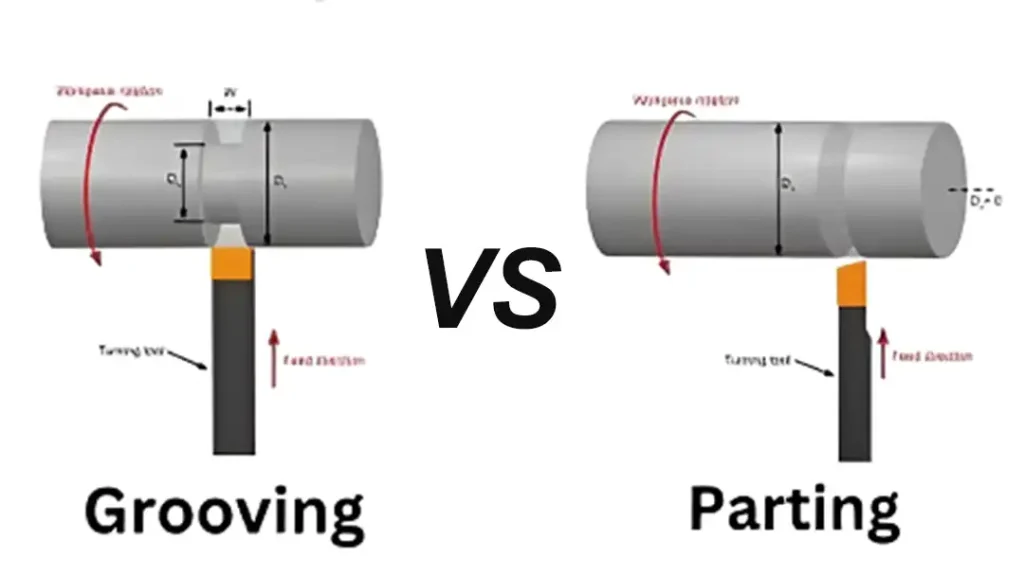
Grooving vs Parting Inserts: Understanding the Right Tool for Parting and Grooving Operations
In turning operations, parting and grooving are often discussed together, yet they represent different cutting challenges within the same machining process. While both rely on narrow cutting tools and similar machine setups, their functional goals, cutting behavior, and stability requirements are not identical.
Understanding the landscape of parting and grooving is essential for selecting the right insert, improving process reliability, and achieving consistent results across different workpieces and machine tool configurations. This article explains how grooving inserts and parting inserts differ, why interchangeability is limited, and how choosing the right tool supports effective parting and grooving without unnecessary technical risk.
Understanding the Landscape of Parting and Grooving
Parting and grooving are common turning operations performed on a lathe, but they serve different roles in production. A grooving operation focuses on creating grooves—such as external grooves, internal grooves, or face grooving—used for functional or assembly purposes. Parting off operations, by contrast, aim to separate a finished component from the bar stock or blank.
Because both operations involve narrow tools cutting radially into a rotating workpiece, they are often grouped together under parting and grooving. However, the cutting engagement, chip behavior, and stability demands differ significantly, especially near the center of rotation during parting-off.
Recognizing these differences helps prevent tool breakage, reduced tool life, and poor surface finish in demanding production environments.
Grooving vs Parting Inserts: What’s the Difference?
Grooving inserts are specialized cutting tools designed for creating precise grooves with defined width and depth. In most grooving applications, the groove width directly determines the insert width, leaving little flexibility once the design is set.
Parting and grooving inserts, while sometimes similar in appearance, are designed for different cutting conditions. During parting-off, the insert is fully engaged across its cutting edge as it advances toward the center of the workpiece, where cutting forces increase and stability becomes critical.
Conceptual Comparison of Grooving and Parting Inserts
| Aspect | Grooving Inserts | Parting Inserts |
|---|---|---|
| Primary function | Creating grooves | Separating the workpiece |
| Typical use | External, internal, face grooving | Parting-off |
| Insert width role | Matches groove exactly | Selected to reduce cutting forces |
| Cutting engagement | Partial | Full at final stage |
| Stability sensitivity | Moderate | High |
| Typical risk | Groove accuracy | Tool deflection or breakage |
This distinction explains why grooving and parting inserts should not be treated as interchangeable cutting tools.
Can Grooving and Parting Inserts Be Used Interchangeably?
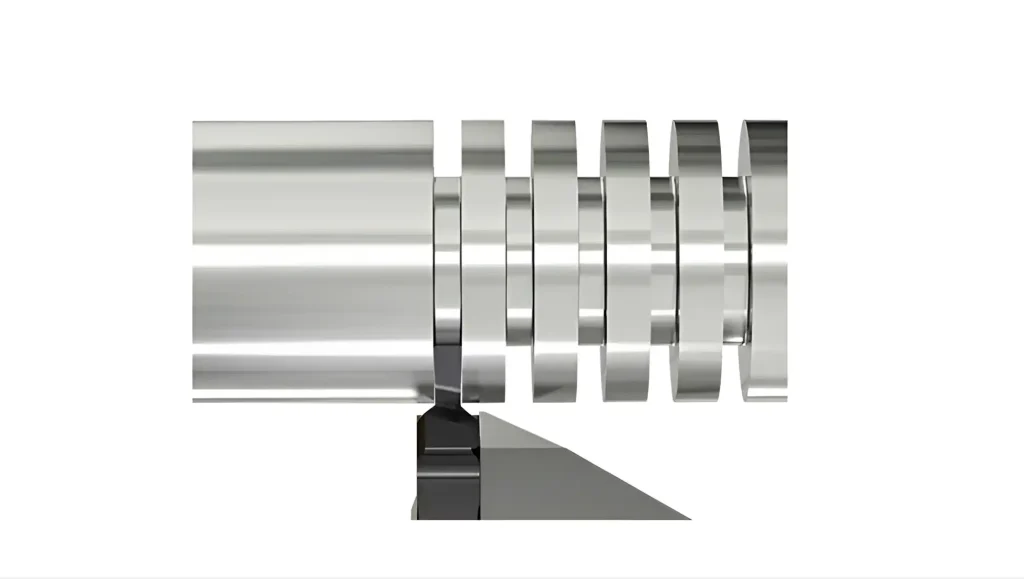
One of the most common questions in turning operations is whether a grooving insert can be used for parting, or whether a parting insert can handle grooving tasks. In practice, interchangeability is limited and application-dependent.
Grooving inserts are optimized for creating precise grooves and maintaining tight tolerance on groove geometry. Using them for deep parting can increase cutting forces and raise the risk of breakage, particularly on large diameters.
Parting inserts, on the other hand, are designed for stable cut-off. While they may handle shallow grooves in certain grooving applications, they are not ideal for creating precise grooves that demand accurate shoulders or superior surface finishes.
For consistent results, selecting the right insert for each parting and grooving operation remains the safest approach.
Insert Width, Stability, and Cutting Forces
Insert width plays a fundamentally different role in grooving and parting. In grooving operations, the insert width defines the groove itself and must match the design requirement exactly. There is no option to choose a wider insert simply for added stability.
In parting off operations, insert width influences cutting forces and tool deflection. Within the limits of workpiece diameter and machine rigidity, a narrower insert can help reduce cutting forces and improve stability.
Balancing insert width with machine capability and part geometry helps avoid vibration, reduced tool life, and poor surface finish during parting-off.
Geometry, Chip Control, and Coolant Delivery
Insert geometry strongly influences how the cutting edge interacts with the material. Rather than focusing on specific angles, it is more practical to understand geometry in terms of cutting behavior, chip control, and cutting stability.
Effective chip control supports smooth chip evacuation and helps prevent chips from packing into the groove or cut. This is particularly important in parting, where chip flow space becomes increasingly limited.
Coolant plays a complementary role by assisting chip evacuation, reducing heat generation, and improving overall cutting reliability. Proper coolant delivery, directed precisely to the cutting zone, supports stable cutting conditions across different materials, including stainless steels and cast iron.
Machine Tool, Tool Holder, and Setup Considerations
Even the most advanced insert cannot compensate for an unstable setup. Machine rigidity, tool holder design, and tool post alignment all influence the outcome of parting and grooving operations.
Long overhangs increase the risk of vibration and tool deflection. Keeping the tool holder as short and rigid as possible helps maintain cutting stability, particularly during deep parting.
Matching the insert, tool holder, and machine tool as a complete system is essential for achieving reliable and repeatable results.
Material Considerations in Parting and Grooving
Material type significantly affects cutting behavior in parting and grooving. Steel and cast iron typically offer predictable chip formation, while stainless steels are often difficult to machine due to their tendency to generate heat and form continuous chips.
Carbide inserts are widely used due to their wear resistance and versatility. Depending on the machining process, CVD or PVD coatings may be applied to balance cutting edge sharpness with durability.
Rather than focusing on specific carbide grade numbers, it is more effective to ensure the insert material and coating are appropriate for the material group and cutting conditions.
Common Mistakes That Prevent Successful Parting and Grooving
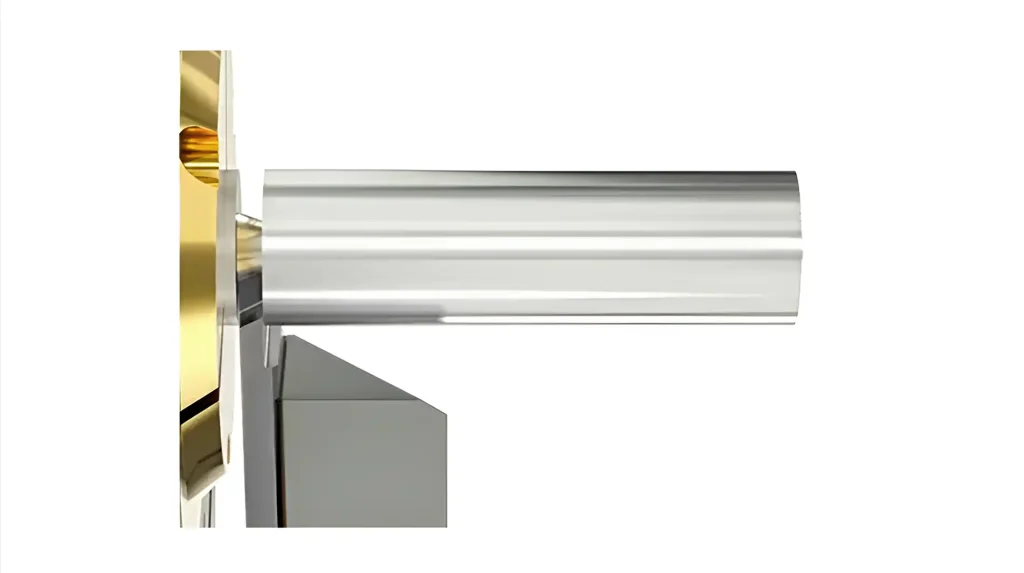
Several recurring mistakes limit success in parting and grooving:
- Using grooving inserts for deep parting without considering stability
- Excessive tool overhangs that increase vibration
- Inadequate coolant delivery
- Poor chip evacuation leading to pips and burrs
- Misalignment of the cutting tool on the lathe
These issues often result in tool breakage, poor surface finish, or reduced productivity.
Best Practices for Successful Parting and Grooving
Successful parting and grooving depend on sound fundamentals rather than aggressive cutting parameters:
- Selecting the right insert for the operation
- Using a rigid tool holder and stable machine setup
- Adjusting feed rate carefully during the final stage of parting-off
- Maintaining consistent coolant flow
- Observing chip behavior and cutting stability
Applying these practices supports longer tool life and more predictable machining outcomes.
Matching the Right Insert Tool to the Operation
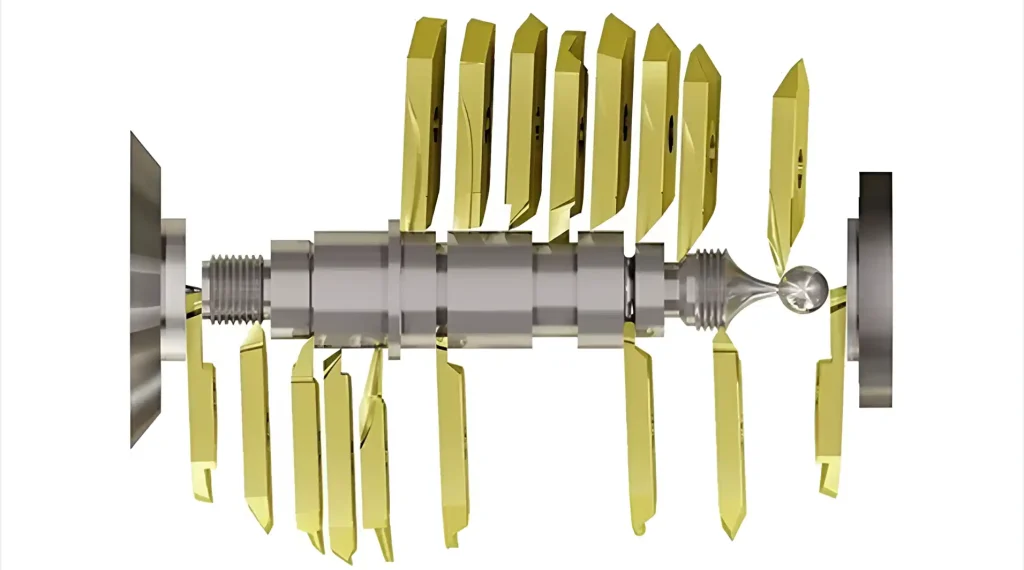
Choosing the right tool means understanding the specific demands of grooving and parting rather than relying on visual similarity alone. Grooving tools are optimized for creating precise grooves, while parting tools focus on stability during cut-off.
Whether you are evaluating alternatives to Sandvik or Iscar systems, compatibility and functional equivalence matter more than brand labels. Inserts designed to be interchangeable with major brands can offer flexibility while maintaining consistent performance across different machine environments.
Selecting the right insert is ultimately about choosing the right tool for the job.
Building Consistency for Successful Parting
Consistency in parting operations is achieved through repeatable setups and controlled cutting conditions. Stable machine tools, reliable insert performance, and disciplined process control all contribute to success in parting and grooving.
Reducing variation helps prevent unexpected breakage and supports steady productivity in high-mix or batch production.
Improving Reliability in Effective Parting and Grooving
Effective parting and grooving are not the result of a single parameter but the interaction of insert design, cutting tool setup, machine tool rigidity, and workpiece material.
When these elements are aligned, manufacturers can achieve excellent surface finish, controlled burr formation, and reliable cutting behavior. This balanced approach supports success in parting and grooving without introducing unnecessary complexity or risk.
Conclusion
Grooving and parting may share similar tools, but they demand different strategies. Understanding how grooving inserts and parting inserts differ, selecting the right insert for each operation, and matching the setup to machine capabilities are essential for stable and efficient turning operations.
By focusing on practical selection principles rather than overly specific technical details, manufacturers can build reliable machining processes that deliver consistent results across a wide range of applications.