
Threading guide
Internal vs External Threading Inserts: Key Differences for CNC Lathes
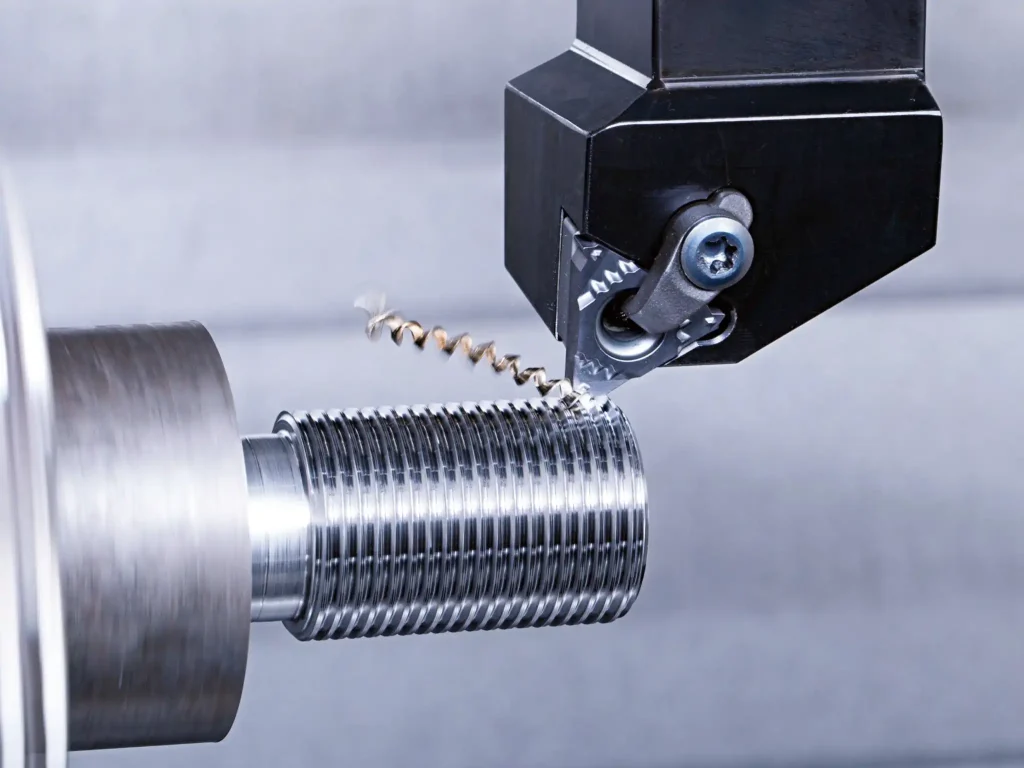
Choosing Carbide Thread Inserts for Internal and External Thread Turning Applications
Internal vs External Threading Inserts play a crucial role in CNC lathe operations, as proper insert selection directly impacts thread quality, tool life, and process stability. This article explores the key differences between internal and external threading conditions, the types of carbide inserts available, and practical guidelines for selecting the right insert to achieve reliable, repeatable results across various thread forms and materials.
Thread Turning in CNC Lathes: Basic Concepts and Applications
What Thread Turning Means in CNC Machining
Thread turning is a fundamental process in CNC machining used to create precise screw threads on cylindrical components. The process involves a single-point cutting tool moving along a predetermined helical path to generate threads with a defined pitch and profile. The thread type—internal threads or external threads—directly determines the selection of threading inserts, toolholders, and machining strategy.
In CNC applications, using an appropriate carbide threading insert is critical to achieving stable thread quality, dimensional consistency, and predictable tool life, while minimizing insert wear and unnecessary downtime.repeatability rather than maximum cutting parameters alone.
A wide variety of turning tools can be used depending on component diameter, workpiece material, and thread form. Screw and bolt machining, for example, requires careful control of thread depth, crest quality, and profile accuracy to ensure proper assembly and functional reliability.
Typical Applications of Internal and External Thread Turning

Thread turning is widely applied in aerospace, automotive, and general precision engineering industries. Internal threads are commonly machined inside cylindrical components such as nuts, blind holes, and threaded housings, while external threads are produced on shafts, rods, and bolts.
For different thread standards—metric or imperial, fine or coarse—the correct threading insert profile must be matched accordingly. Material properties also influence insert choice. Aluminum alloys often benefit from sharper, polished cutting edges with positive rake angles to reduce built-up edge, whereas stainless steels typically require tougher carbide grades and more robust edge preparation to improve wear resistance and process stability.
Why Insert Selection Matters
The threading insert directly affects tool life, chip control, cutting forces, and overall productivity. High-quality carbide inserts provide stable performance across a wide range of materials and thread forms. Correct insert profile and pitch compatibility are essential to avoid defects such as incomplete crests, inconsistent thread depth, or material deformation.
In batch or series production, consistent insert selection helps ensure that both internal threads and external threads maintain uniform quality from part to part. Toolholder rigidity and single-point cutting engagement also influence the smoothness of thread generation, particularly when machining fine-pitch threads or hard-to-cut materials.
Internal vs External Thread Turning: Practical Differences
Characteristics of Internal Thread Applications
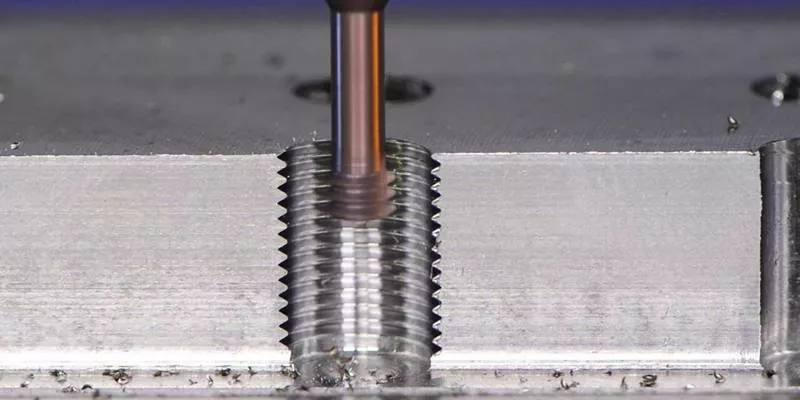
Internal threading presents inherent space limitations and higher risk of tool deflection. Partial profile inserts are commonly used to accommodate restricted internal geometries while allowing sufficient chip evacuation. For deeper threads, full profile inserts may still be applied to reduce the number of passes, provided that tool rigidity and clearance conditions are adequate.
Attention must be paid to thread pitch, minor diameter, and the design of the run-out groove at the bottom of blind holes. Sufficient clearance behind the last thread is essential to prevent insert damage and ensure complete thread formation.
Characteristics of External Thread Applications
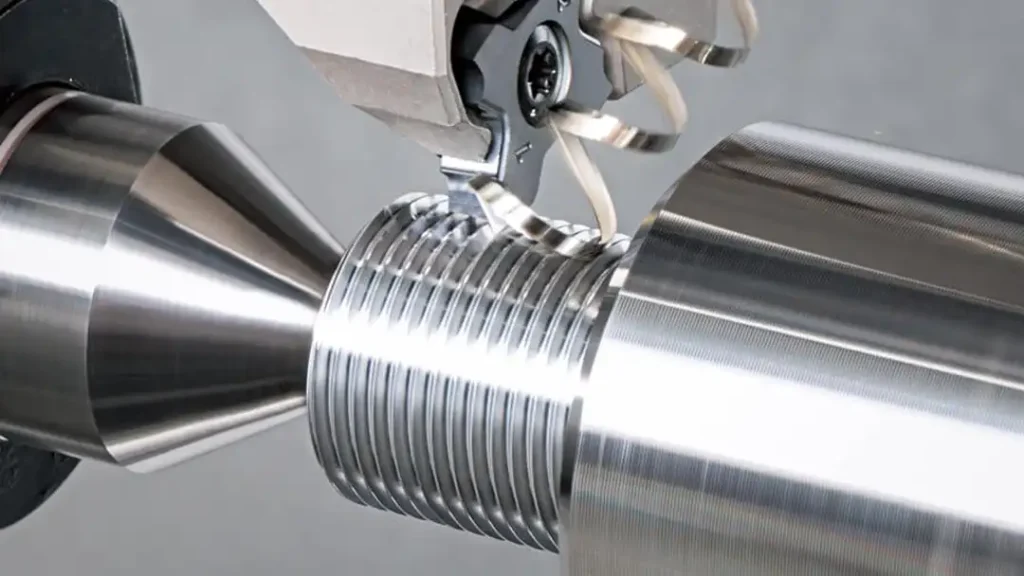
External threads are machined on open surfaces such as shafts or rods, allowing greater flexibility in tool selection and cutting parameters. Full profile threading inserts are widely used to achieve complete thread form in fewer passes, supporting higher productivity and consistent thread quality.
Multi-corner inserts or indexable designs can further improve tool economy, provided that cutting engagement remains stable. External threading requires close control of thread form, crest sharpness, and dimensional accuracy to ensure reliable assembly with mating components.
How These Differences Influence Tool and Insert Choice
Understanding the differences between internal and external threading is essential for selecting the correct insert type. Internal threading often favors smaller IC sizes, partial profile inserts, and conservative cutting conditions to manage deflection. External threading allows more robust insert geometries and higher material removal rates.
Correct insert selection helps minimize vibration, reduce insert wear, and maintain consistent thread quality across different machining setups.
Common Types of Thread Inserts Used in CNC Applications
General-Purpose Thread Inserts for CNC Lathes
Modern CNC lathes support a wide range of threading inserts designed for specific applications. Carbide threading inserts are commonly used for both internal and external threads due to their predictable performance and wear resistance. Proper insert selection remains a key factor in maintaining thread accuracy during continuous or repetitive production.
Partial Profile and Full Profile Thread Inserts
Partial profile inserts cut only the flanks of the thread and require multiple passes to reach full depth. They are suitable when one insert must accommodate multiple thread pitches or when internal space is limited.
Full profile inserts generate the complete thread form, including crest geometry, in fewer passes. This reduces cutting time and helps control dimensional variation. Selecting the correct pitch-specific insert is essential to avoid profile mismatch and excessive cutting forces.
Matching Insert Types to Internal and External Threads
Insert selection must consider thread standard, pitch, diameter, profile angle, cutting direction (RH or LH), and workpiece material. Metric and imperial systems further define insert geometry requirements.
When properly matched, threading inserts provide stable cutting performance, consistent thread engagement, and extended tool life. At FH, insert matching is typically validated through application testing to ensure reliability rather than theoretical compatibility alone.
Insert Geometry Considerations for Internal and External Threads
Geometry Factors That Affect Threading Performance
Insert geometry influences chip control, cutting forces, surface finish, and wear behavior. Profile accuracy and cutting edge preparation are critical to achieving clean thread flanks and consistent crests across different thread forms and materials.
Geometry Considerations for Internal Thread Applications
Internal threading inserts must fit within confined spaces while maintaining sufficient clearance near the run-out area. Partial profile inserts are often preferred, especially for blind holes. Proper edge design supports smooth material removal and reduces the risk of chip packing and insert chipping.
Geometry Considerations for External Thread Applications
External threading benefits from full profile inserts with stable edge geometry. Correct insert design ensures uniform thread depth, clean crests, and reliable surface finish, particularly when machining stainless steel or low-carbon steels.
Single-point cutting engagement, when combined with rigid toolholding, helps maintain dimensional stability and repeatable results.
How to Choose the Right Thread Insert for Your CNC Application
Key Factors to Consider When Choosing a Thread Insert
Key factors include thread type, standard, pitch, diameter, workpiece material, and machine rigidity. Partial profile, full profile, and multi-corner inserts each serve different operational needs. Selecting the appropriate insert type is essential for balancing thread quality, tool life, and machining efficiency.
Choosing Inserts for Internal vs External Threads
Internal threading typically requires smaller inserts with controlled geometry to prevent interference and vibration. External threading allows greater flexibility and often favors full profile inserts for higher productivity. Proper selection ensures consistent quality for both internal threads and external threads across varying production conditions.
Common Selection Mistakes in CNC Threading
Common mistakes include selecting inserts solely by thread type without considering pitch accuracy, material compatibility, or cutting forces. Ignoring insert geometry or toolholder rigidity can result in poor surface finish, reduced tool life, and inconsistent threads. Insert selection should always be aligned with the overall threading process and machine capability.
Practical Guidelines for Stable and Consistent Threading
Ensuring Stability in Internal Thread Applications
Use inserts with suitable IC size and edge preparation, combined with anti-vibration toolholders where necessary. Ensure adequate run-out clearance behind the last thread and prioritize effective chip control, particularly in blind-hole applications.
Ensuring Consistency in External Thread Applications
Optimize cutting parameters and use full profile or multi-corner inserts to maintain uniform thread depth and crest quality. Always confirm compliance with the required metric or imperial thread standard before production.
Balancing Tool Life, Accuracy, and Productivity
Balancing these factors requires matching insert geometry, carbide grade, and cutting conditions to the application. Properly selected threading inserts reduce tool stress, stabilize cutting forces, and support repeatable performance across a wide range of threaded components.
Conclusion: Selecting Thread Inserts for Internal and External Threads
Selecting the correct threading insert is essential for achieving precise threads, stable machining, and extended tool life in CNC applications. By carefully evaluating thread type, pitch, standard, insert geometry, and workpiece material, manufacturers can ensure consistent quality for both internal and external threads.
A disciplined approach to insert selection—focused on process stability rather than aggressive parameters—helps maximize performance across different thread forms and production environments. This philosophy aligns with FH’s long-term focus on practical tooling solutions that support reliable, repeatable threading operations.