
Milling guide
APMT1135 vs APMT1604 Inserts: Size Comparison and Selection Guide
APMT1135 or APMT1604: Which Insert Size Should You Use?
APMT inserts are widely used in shoulder milling, face milling, and general CNC machining. Among the available sizes, APMT1135 and APMT1604 are two of the most common options found in machine shops around the world.
Although both inserts share the same basic geometry, their size differences influence cutter design, cutting performance, productivity, and machine load. Selecting the appropriate insert size is therefore an important part of cutter selection and process optimization.
This article compares APMT1135 and APMT1604 inserts and explains the practical factors that influence insert selection.
APMT1135 vs APMT1604: Quick Comparison
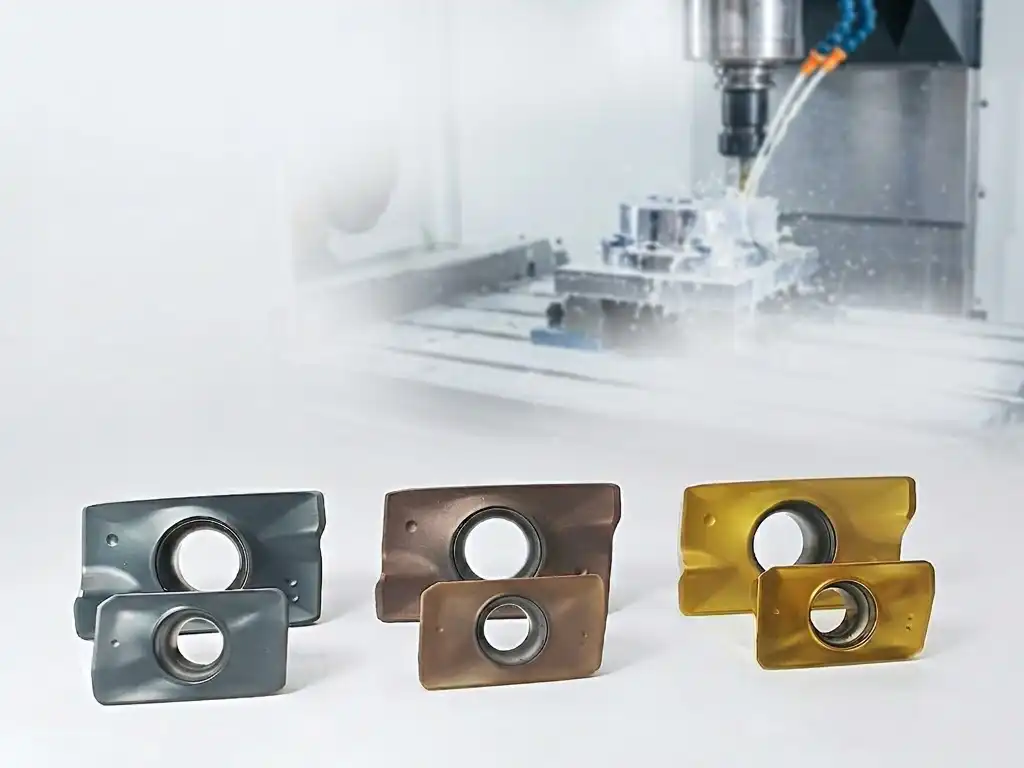
The table below summarizes the main differences between these two commonly used APMT insert sizes.
| Feature | APMT1135 | APMT1604 |
|---|---|---|
| Typical Inscribed Circle (I.C.) | 6.35 mm | 9.525 mm |
| Thickness (S) | 3.5 mm | 4.76 mm |
| Typical Cutter Size | Smaller cutters | Medium to large cutters |
| Feed Capability | Moderate | Higher |
| Edge Support* | Moderate | Higher |
| Machine Load | Lower | Higher |
*When using similar carbide grades and edge preparation.
Note: Exact dimensions may vary slightly between manufacturers.
While both inserts are used for similar milling operations, the larger APMT1604 generally allows more robust cutter designs and higher feed potential, whereas APMT1135 offers advantages in compact tooling systems.
Why Insert Size Matters
When selecting indexable milling inserts, many machinists focus on carbide grade, coating, or chipbreaker geometry. However, insert size also plays an important role.
A larger insert generally provides:
- Greater edge support
- Higher feed capability
- Improved stability
- Increased productivity potential
A smaller insert typically offers:
- Lower cutting forces
- Reduced spindle load
- Better accessibility in restricted areas
- Compatibility with smaller cutter bodies
Because insert size influences both cutter design and machining performance, it should be considered alongside grade and geometry during the tooling selection process.
When APMT1135 Is the Better Choice
APMT1135 is commonly used in smaller milling cutters and applications where lower cutting forces are desirable.
Smaller Cutter Diameters
The compact size of APMT1135 allows cutter manufacturers to design smaller indexable end mills and shoulder milling cutters.
This makes the insert suitable for applications where tool access is limited or where smaller cutter diameters are preferred.
Lower Machine Power
Smaller machining centers often benefit from the lower cutting forces associated with smaller inserts.
Reducing spindle load can improve stability and help minimize vibration, particularly when machining with longer tool overhangs.
Light-to-Medium Milling Operations
For profiling, shoulder milling, and general machining tasks, APMT1135 often provides sufficient performance without requiring larger cutter systems.
Improved Accessibility
Smaller inserts allow cutter bodies to reach narrower pockets, shoulders, and confined machining areas that may be difficult to access with larger tools.
When APMT1604 Is the Better Choice
APMT1604 is often selected when greater productivity and higher feed capability are required.
The larger insert body provides additional support and allows cutter manufacturers to design more robust tooling systems.
Higher Feed Rates
One of the main advantages of APMT1604 is its ability to support higher feed rates when machine rigidity and cutter design allow.
Larger inserts typically accommodate higher feed per tooth (fz), which can contribute to increased material removal rates.
Larger Cutter Bodies
Face mills and larger shoulder milling cutters commonly use APMT1604 inserts because they provide more insert support and greater stability.
Medium-to-High Productivity Milling
Although APMT inserts are generally considered positive-geometry inserts intended for light-to-medium cutting applications, APMT1604 is often preferred when productivity becomes a higher priority.
Increased Edge Support
When comparing similar carbide grades and edge preparations, the larger insert size generally provides greater support behind the cutting edge.
This can improve process stability under demanding machining conditions.
Productivity Depends on the Entire System
It is easy to assume that a larger insert automatically improves productivity. In practice, the situation is more complex.
Machining performance depends on multiple factors, including:
- Machine rigidity
- Spindle power
- Cutter design
- Workpiece material
- Cutting speed (Vc)
- Feed per tooth (fz)
- Radial and axial engagement
A larger insert may support higher feed rates, but if the machine lacks sufficient rigidity or power, those advantages may never be realized.
Likewise, a smaller insert can often achieve excellent results when matched with an appropriate cutter and machining strategy.
The most productive insert is not necessarily the largest one—it is the one that best matches the entire machining system.
Typical Applications
Both APMT1135 and APMT1604 are commonly used in:
- Shoulder milling
- Face milling
- Profiling
- Ramp milling
- General CNC machining
- Steel machining
- Stainless steel machining
- Aluminum milling
Because APMT inserts use a positive cutting geometry, they are valued for their smooth cutting action and relatively low cutting forces.
For a broader overview of insert design, geometry, and cutter selection principles, see our guide to APMT milling inserts.
Compatibility and Cutter Matching
One of the reasons APMT inserts remain popular is their widespread use across many indexable milling systems.
They are commonly found in:
- Square shoulder milling cutters
- Face milling cutters
- Indexable end mills
- General-purpose milling cutters
When selecting replacement inserts, machinists should verify:
- Insert designation
- Pocket dimensions
- Clamping method
- Corner radius
- Carbide grade
Even when inserts appear visually similar, dimensional differences between insert sizes require the correct cutter pocket and mounting configuration.
For this reason, insert selection should always begin with the cutter manufacturer’s specification.
Final Recommendation
For most applications, the choice between APMT1135 and APMT1604 comes down to cutter size, machine capability, and productivity requirements.
APMT1135 is often the preferred option for smaller cutter bodies, lower machine power, and applications where accessibility is important.
APMT1604 is generally favored when larger cutters, higher feed rates, and greater productivity are required.
Neither insert is universally better than the other. The best choice is the one that matches the cutter design, machining conditions, and production objectives of the application.
Understanding these differences allows machinists and purchasing teams to select inserts more effectively and achieve consistent machining performance.
For a broader introduction to insert geometry, applications, and selection principles, read our companion article: A Practical Guide to APMT Milling Inserts.