
Milling guide
Climb Milling vs Conventional Milling: Key Differences and When to Use Each
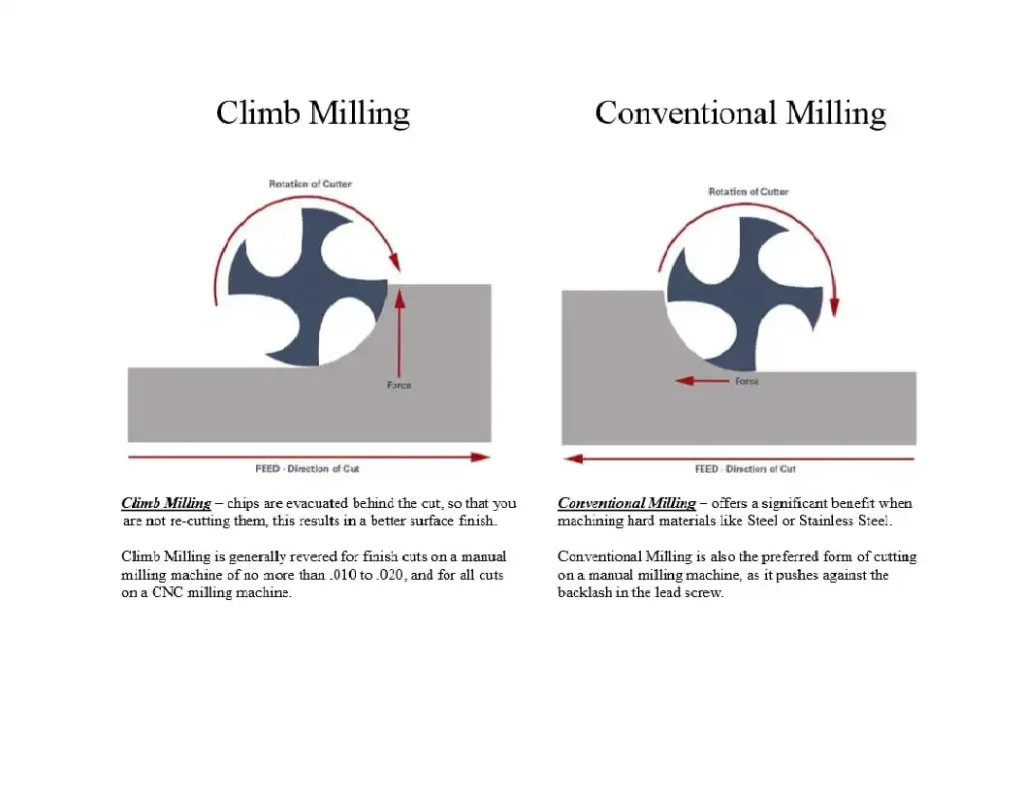
Climb vs Conventional Milling: Key Differences and Best Use Cases
What Is Climb Milling and Conventional Milling
Climb vs conventional milling is one of the most fundamental comparisons in the milling process. The difference between these two methods comes down to how the cutter engages the workpiece relative to the feed direction.
What Is Climb Milling
In a climb mill setup, the cutter rotates in the same direction as the feed direction. The chip thickness starts thick and decreases to zero as the cutter exits the material. This means the cutting tool immediately engages the workpiece, avoiding the rubbing phase common in other methods.
Because the cutter bites directly into the material, climb milling produces a better surface finish, reduces tool wear, and improves tool life. Chips are evacuated behind the cutter, helping carry heat generated away from the cutting zone.
In cnc machines, climb milling is generally the preferred way because backlash is minimized or controlled. The cutting force is directed downward, pressing the workpiece firmly against the machine table and improving stability.
What Is Conventional Milling
In a conventional mill, the cutter rotates against the direction of the feed. The chip thickness starts near zero and increases as the cut progresses. This creates an initial rubbing or sliding action before actual cutting begins.
This rubbing increases heat generated and leads to higher wear on the cutting tool. In addition, the cutting force is directed upward, which can tend to lift the workpiece, especially in horizontal milling.
Conventional cutting is considered a traditional approach and is still useful in specific situations, particularly when dealing with unstable setups or surface conditions like hot rolled materials.
Key Differences Between Climb Milling and Conventional Milling
Understanding the differences between climb milling and conventional milling is critical for any machinist working with a milling machine.
Comparison Table
| Aspect | Climb Milling | Conventional Milling |
|---|---|---|
| Chip formation | Thick to thin | Thin to thick |
| Cutting engagement | Immediate cutting | Initial rubbing |
| Cutting force | Downward, stabilizing | Upward, can lift the workpiece |
| Heat distribution | Heat carried away by chips | Heat absorbed by tool and workpiece |
| Surface finish | Better surface finish, smoother surface | Rougher surface finish |
| Tool wear | Lower tool wear | Higher wear on the cutting tool |
| Tool life | Longer tool life | Shorter tool life |
| Machine requirement | Requires low backlash cnc machines | Suitable for machines with backlash |
Cutting Forces and Stability
In climb milling, the cutting force is directed into the workpiece, which improves rigidity and reduces tool deflection. In conventional milling, the upward force on the workpiece can reduce stability and increase vibration.
Surface Finish and Quality
Climb milling results in a smoother surface and superior surface quality. Because the cutter avoids rubbing, it can improve the surface finish and achieve a better finish overall.
Conventional milling often results in a rough surface due to inconsistent engagement between the cutter and the workpiece.
Tool Wear and Tool Life
Tool wear is significantly influenced by how heat generated is handled during the cut. In climb milling, chips are evacuated behind the cutter and carry away much of the heat, reducing wear on the cutting tool.
In conventional milling, more heat is transferred into the tool and the workpiece, accelerating wear on the cutting tool and reducing tool life.
This is especially important when using carbide inserts, where proper cutting conditions can greatly extend tool life.
How Climb and Conventional Milling Work on a Milling Machine
Tool Rotation vs Feed Direction
The core difference between climb and conventional milling is the relationship between cutter rotation and feed direction. This determines how the cutting tool engages the workpiece.
Cutting Force Behavior
In climb milling, the cutting force is directed downward, helping stabilize the workpiece. In conventional milling, the force pulls the cutter away from the workpiece, which can lead to vibration and instability.
Impact on Machine and Setup
Climb milling requires cnc machines with minimal backlash or a backlash eliminator. If backlash or have a backlash exists, the cutter may dig into the workpiece, increasing the risk of tool breakage.
Conventional milling is more forgiving in less rigid setups and is sometimes preferred when machine conditions are not ideal.
Advantages and Disadvantages of Each Method
Advantages of Climb Milling
- Produces better surface finish and smoother surface
- Improves tool life and reduces tool wear
- Chips are evacuated behind the cutter
- Results in a better surface and more consistent surface quality
Disadvantages of Climb Milling
- Requires rigid cnc machines
- Sensitive to backlash
- Risk of tool breakage if setup is unstable
Advantages of Conventional Milling
- Works on machines with backlash
- Suitable for unstable setups
- Effective for hard materials like cast iron and hot rolled surfaces
Disadvantages of Conventional Milling
- Results in a rougher surface finish
- Higher heat generated
- Increased wear on the cutting tool
Climb or Conventional Milling: How to Choose
Choosing between conventional or climb milling depends on machine condition, material, and cutting requirements.
When to Use Climb Milling
- In cnc milling applications with rigid setups
- When aiming for better surface finish
- When longer tool life is required
- When chips need to be evacuated efficiently
When to Use Conventional Milling
- When machine has backlash or instability
- When machining cast surfaces with scale (black skin)
- When dealing with work hardening materials
- When a traditional approach is safer
Factors That Affect Your Choice
- Machine rigidity and backlash
- Cutting tool selection
- Workpiece material
- Required surface finish and tolerance
Climb Milling in CNC Machines: Why It Is Preferred
Climb milling has been recognized as the preferred way to approach a workpiece in modern cnc machines.
Backlash Control in CNC Machines
Modern cnc machines eliminate backlash or have a backlash control system, making climb milling safe and effective.
Benefits for Surface Finish
Climb milling produces a superior surface and improves the surface finish due to stable cutting action.
Impact on Tool Life
Because the tool is less likely to rub before cutting, wear on the cutting tool is reduced, extending tool life.
Common Mistakes When Choosing Between Climb and Conventional Milling
Using Climb Milling on Machines with Backlash
This can cause the cutter to dig into the workpiece, increasing the risk of tool breakage.
Assuming Climb Milling Is Always Better
Though climb milling is often preferred, there are times when conventional milling is the better choice.
Ignoring Material Conditions
Surface conditions such as hot rolled scale or hard outer layers can affect performance and tool life.
Choosing the Wrong Cutting Tool
Incorrect cutting tool selection can negatively impact machining performance, surface finish, and tool life.
Real-World Applications of Climb and Conventional Milling
Roughing vs Finishing
In modern cnc machining, climb milling is the preferred method for both roughing and finishing, although conventional milling still has its place in specific scenarios.
Machining Cast or Forged Surfaces (Black Skin Case)
When machining cast iron or forged parts with a hard outer layer, climb milling may cause the cutter to dig into the workpiece, increasing the risk of tool breakage.
In these cases, conventional milling is often the preferred way to approach a workpiece, as it cuts from inside to outside, reducing the impact on the cutting edge.
Material-Based Applications
Climb milling is ideal for softer materials like aluminum, while conventional milling can be beneficial for hard materials like cast iron.
Conclusion: Choosing the Right Milling Strategy
Climb milling and conventional milling each have their place in cnc machining. Understanding their differences, advantages, and limitations helps machinists select the preferred way to approach each workpiece.
Key Takeaways
- Climb milling provides better surface finish and longer tool life
- Conventional milling is useful for specific conditions like backlash or hard surface layers
- Machine condition and application determine the best method
Optimizing Your CNC Milling Process
Selecting the right milling strategy improves machining efficiency, reduces tool wear, and ensures consistent surface quality.