
Milling guide
Milling Insert Grades Guide: Choosing the Right Grade for CNC Machining
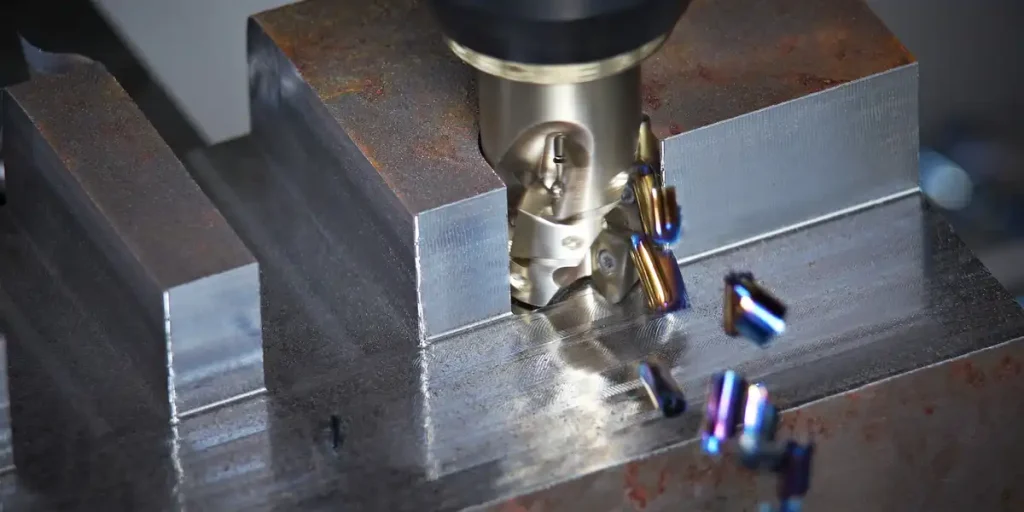
Milling Insert Grades Explained: How to Match Grade to Machining Conditions
What Are Milling Insert Grades?
Milling insert grades describe how an insert is built and how it performs during milling tasks. In simple terms, an insert grade is defined by the carbide substrate and the surface coating applied to it. Together, these elements determine wear resistance, toughness, and overall tool life in different milling conditions.
Milling insert grades help users choose inserts that match the work material, machining goals, and operating environment. Whether the task involves cast iron, hardened steel, or non-ferrous materials, selecting the correct insert grade supports stable performance and predictable results.
Common configurations include PVD-coated, CVD-coated, and uncoated carbide inserts. Each option offers a different balance between durability, surface quality, and resistance to wear.
Why Insert Grade Selection Matters in Milling
Selecting the right insert grade plays a critical role in milling efficiency and reliability. A grade that does not match the machining conditions may lead to rapid wear, unstable chip formation, or reduced tool life.
In rough applications, inserts are exposed to higher loads and impact, requiring tougher grades that resist fracture and chipping. In finishing stages, sharper edges and controlled coatings help achieve better surface finishes while maintaining consistent performance.
Different work materials respond differently to heat, pressure, and friction. Matching the insert grade to the material group, milling strategy, and cutting speeds reduces the risk of thermal cracking, plastic deformation, and uneven wear.
Key Factors That Influence Milling Grade Choice
Carbide Substrate Characteristics
The carbide substrate forms the foundation of every milling insert. A high-hardness carbide substrate improves wear resistance and supports high-speed milling, while a tough carbide substrate offers better resistance to impact and edge damage.
Balancing hardness and toughness is essential. Hard substrates perform well in stable environments, whereas tougher substrates are more forgiving under variable loads and interrupted milling operations.
Coating Type and Purpose
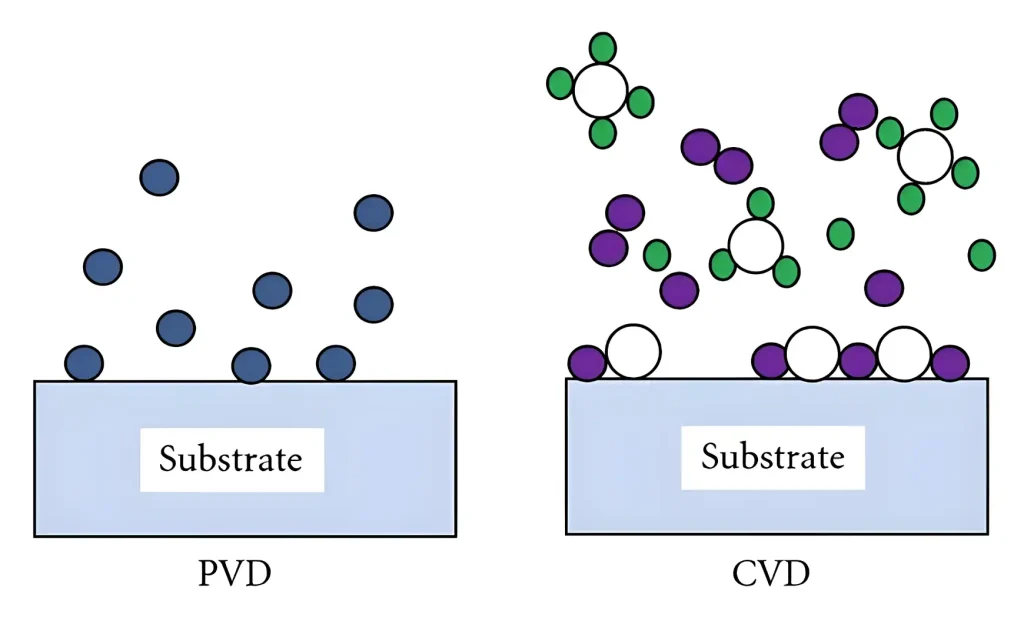
Coatings protect the insert surface and extend tool life by reducing friction and heat. Physical vapor deposition (PVD) coatings are typically thinner and maintain sharpness, making them suitable for general insert milling and applications requiring clean surface finishes.
Chemical vapor deposition (CVD) coatings are thicker and provide strong thermal stability, often preferred for longer runs and demanding materials. Both PVD and CVD coatings are designed to improve wear resistance and slow down wear and plastic deformation.
Uncoated inserts remain useful in specific cases, especially where sharpness and low cutting force are priorities.
Milling Conditions and System Stability
Milling grades should always be selected with the overall machining setup in mind. Feed rates, depth of cut, cutting speeds, and machine rigidity all influence how an insert performs.
A rigid system allows harder grades to operate efficiently, while less rigid setups benefit from tougher grades that absorb vibration and reduce edge damage. Understanding these relationships helps maintain long and stable tool life across various milling operations.
Grade Selection by Work Material
Steel and Alloy Materials
For steel and alloy machining, milling grades are often chosen to balance wear resistance and toughness. Coatings help manage heat, while substrate strength supports consistent tool performance.
Hardened Steel
Hardened steel applications typically require grades with excellent wear and fracture resistance. These grades help maintain edge integrity and reduce premature failure under higher stress conditions.
Cast Iron
Cast iron milling favors wear-resistant grades with stable edge behavior. Proper grade selection supports predictable chip control and consistent surface quality during extended runs.
Non-Ferrous Materials
When machining non-ferrous materials such as aluminum or copper alloys, sharper edges and lighter coatings are preferred. These grades prioritize smooth material flow and reduced resistance at the tool edge.
Ceramics, Cermets, and Advanced Materials
Special materials such as ceramics, cermets, and carbide grades along with CBN-tipped inserts are used in high-speed and specialized milling. These options offer high hardness and thermal shock resistance for demanding environments.
Practical Guidelines for Choosing Milling Insert Grades
A good starting point is to use a general milling grade that performs reliably across common applications. From there, adjustments can be made based on observed wear patterns, chip behavior, and surface results.
It is important to consider grade and geometry combinations, rather than focusing on insert grade alone. The combination of grade and geometry directly affects wear resistance and chipping resistance, as well as overall stability.
Rather than relying on specific numeric grade codes, users should focus on matching the insert to the work material, milling strategy, and operating conditions. This approach supports longer tool life and consistent results.
FH Milling Insert Grades and Application Support
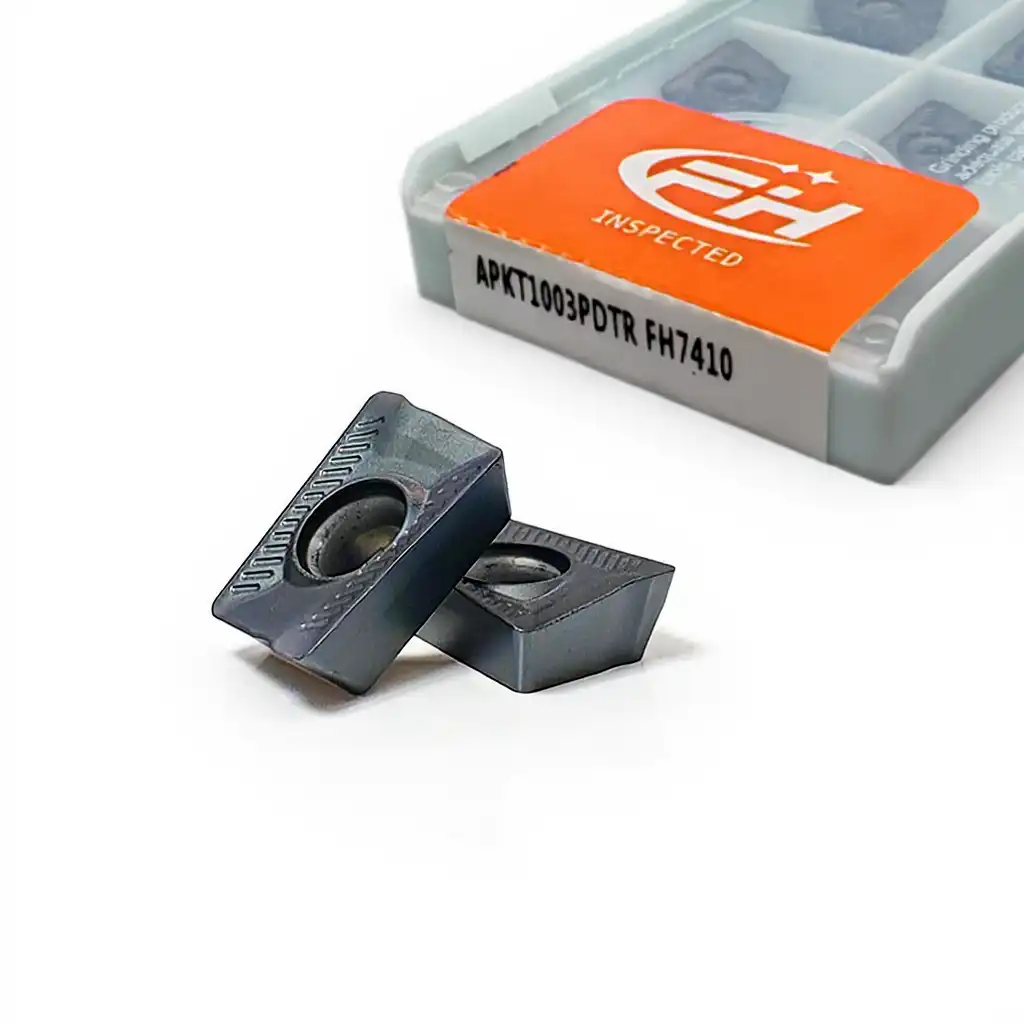
FH provides a structured range of milling insert grades developed to support common milling operations across different work materials. Each grade is designed with a specific balance between carbide substrate performance, coating characteristics, and cutting stability, helping users achieve consistent results under a variety of machine conditions.
Instead of promoting a single general-purpose solution, FH offers different grades for machining steel, cast iron, stainless steel, hardened steel, and selected non-ferrous materials. These grades are intended to cover typical rough, semi-finish, and finish milling needs while maintaining predictable tool life and stable wear behavior in daily production environments.
To help users better understand grade characteristics and application scope, FH provides a detailed milling insert catalog that outlines grade positioning, recommended material groups, and typical machining scenarios. The catalog serves as a practical reference for selecting suitable grades based on work material, cutting speed, and machining strategy. For more specific requirements or non-standard applications, FH’s technical support team can assist with grade recommendations and application guidance.