
Turning guide
WNMG Insert: Cost-Effective Turning Solution with 6 Cutting Edges
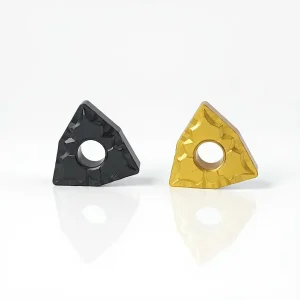
WNMG Insert: When to Use It for Stable Turning (vs CNMG & DNMG)
In CNC turning, selecting the right insert directly impacts tool life, surface finish, and overall machining efficiency. The WNMG insert is widely recognized as a reliable solution for stable cutting conditions, especially when a balance between edge strength, cost, and performance is required.
This guide focuses on when to use WNMG inserts, how they differ from other geometries, and how to select the right solution for your machining needs.
When Should You Choose a WNMG Insert?
A WNMG insert is typically chosen when machining conditions require stability, durability, and consistent cutting performance.
It is well suited for:
- Medium cutting loads on steel and cast material
- General turning where machine rigidity is moderate
- Interrupted cutting conditions where edge toughness is critical
- Shops seeking a cost-effective and reliable insert solution
Compared to sharper geometries, this insert offers stronger resistance to wear and deformation, resulting in more predictable machining results.
What Makes WNMG Different from Other Inserts?
Understanding how WNMG compares with other common turning insert geometries is essential for making the right decision.
WNMG vs CNMG Insert
CNMG is widely used for heavy roughing due to its strong 80° geometry. However, WNMG offers similar edge strength with the added advantage of 6 cutting edges instead of 4, making it a more cost-effective choice for stable, general-purpose turning.
WNMG vs TNMG Insert
WNMG provides a stronger 80° wedge angle compared to TNMG’s 60°, resulting in better edge toughness and improved performance in interrupted cuts or heavier stock removal.
WNMG vs DNMG Insert
DNMG inserts are better suited for finishing applications and tight machining areas. In contrast, WNMG inserts provide stronger cutting edges and are less prone to breakage, making them more suitable for semi-finishing and general turning.
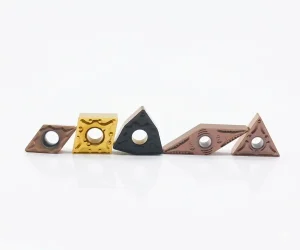
WNMG Insert Geometry: Why the 80° Angle Matters
The geometry of the WNMG insert plays a critical role in its performance.
- The 80° trigon shape improves load distribution
- The negative rake design increases edge strength
- The double-sided trigon insert structure provides multiple usable edges
One of the key advantages of the WNMG insert is its 6 cutting edges, which significantly improves tool life per insert and reduces cost per edge in high-volume machining.
Compared to positive inserts, this geometry is less sharp but offers superior toughness and wear resistance, especially when machining steel and cast materials.
Best Applications for WNMG Inserts
The WNMG insert is widely used across different machining scenarios.
Steel Turning
This is the most common application. The insert delivers stable cutting performance and reliable tool life under medium feed and speed conditions.
Interrupted Cutting
Thanks to its strong cutting edge and robust geometry, WNMG performs well in interrupted cutting, helping prevent edge chipping and premature failure.
Semi-Finishing Operations
WNMG inserts are suitable for semi-finishing, where a balance between surface finish and productivity is required.
When NOT to Use WNMG Inserts
Understanding limitations helps avoid poor machining results.
Avoid using WNMG inserts in the following situations:
- Finishing applications requiring tight tolerances → choose positive inserts or sharper geometries such as DNMG or VCGT
- Heavy roughing operations → CNMG insert is a better choice
- Machining tight or complex areas → smaller angle inserts provide better access
- Aluminum or soft materials → sharp edge positive inserts perform better
Using the correct insert geometry is essential for achieving optimal results.
How to Select the Right WNMG Insert
Selecting the correct insert involves several key factors.
Material
- Steel → general-purpose carbide grades
- Stainless steel → wear-resistant coating required
- Cast iron → focus on toughness and stability
Cutting Parameters
- Higher feed → stronger chip breakers required
- Higher cutting speed → advanced coating technology improves performance
- Unstable conditions → prioritize edge strength
Nose Radius
- Smaller radius → better surface finish
- Larger radius → improved strength and durability
For more detailed chipbreaker and grade options, refer to our carbide insert catalog for full specifications.
WNMG Insert Size Guide
The most common sizes include:
- WNMG 0604 → suitable for light to medium cutting
- WNMG 0804 → the most widely used size for general-purpose turning
These sizes provide a good balance between cutting edge strength and application flexibility.
Cost Efficiency: WNMG vs CNMG
| Comparison Metric | WNMG Insert | CNMG Insert |
|---|---|---|
| Shape Angle | 80° (Strong) | 80° (Strong) |
| Total Cutting Edges | 6 Edges | 4 Edges |
| Cost per Edge | Lower | Standard |
This makes WNMG a more economical choice for machine shops and manufacturers focused on cost efficiency without sacrificing cutting performance.
FH offers WNMG insert solutions engineered for stable machining performance, helping manufacturers achieve better tool life and cost efficiency in turning applications.
Additional Factors That Affect Performance
To achieve optimal machining results, consider:
- Proper holder and clamp system
- Machine rigidity and setup
- Coating and substrate combination
- Effective chip control using chip breakers
These factors influence tool life, wear resistance, and surface finish.
FAQ
What does WNMG mean?
It refers to a standardized insert geometry, including shape, tolerance, and cutting design used in turning operations.
Is WNMG suitable for stainless steel?
Yes, with the appropriate grade and coating, it performs effectively in stainless steel machining.
What holder is used for WNMG inserts?
WNMG inserts require compatible negative rake tool holders designed for this insert geometry.
Conclusion
The WNMG insert is a reliable and cost-effective solution for stable turning operations. Its 80° geometry, strong cutting edge, and 6-edge design make it particularly suitable for general-purpose machining and semi-finishing applications.
While it is not ideal for every situation, understanding its strengths and limitations allows you to make better tooling decisions, improve tool life, and optimize machining performance.